food waste + prevention

food waste facts + stats
The USDA estimates that nearly 40% of the available food supply is wasted and sent to the landfill
Food is the largest component in the landfill, accounting for 24% of the total
Food waste costs the U.S. economy roughly $221 billion annually
Food waste has increased by 50% since the 1970s
Food waste accounts for 8-10% of global methane emissions
The government encourages food donation by protecting food donors from liability for donations to charities made in good faith, under the "Emerson Good Samaritan Food Donation Act" of 1996
best ways to prevent + divert food waste
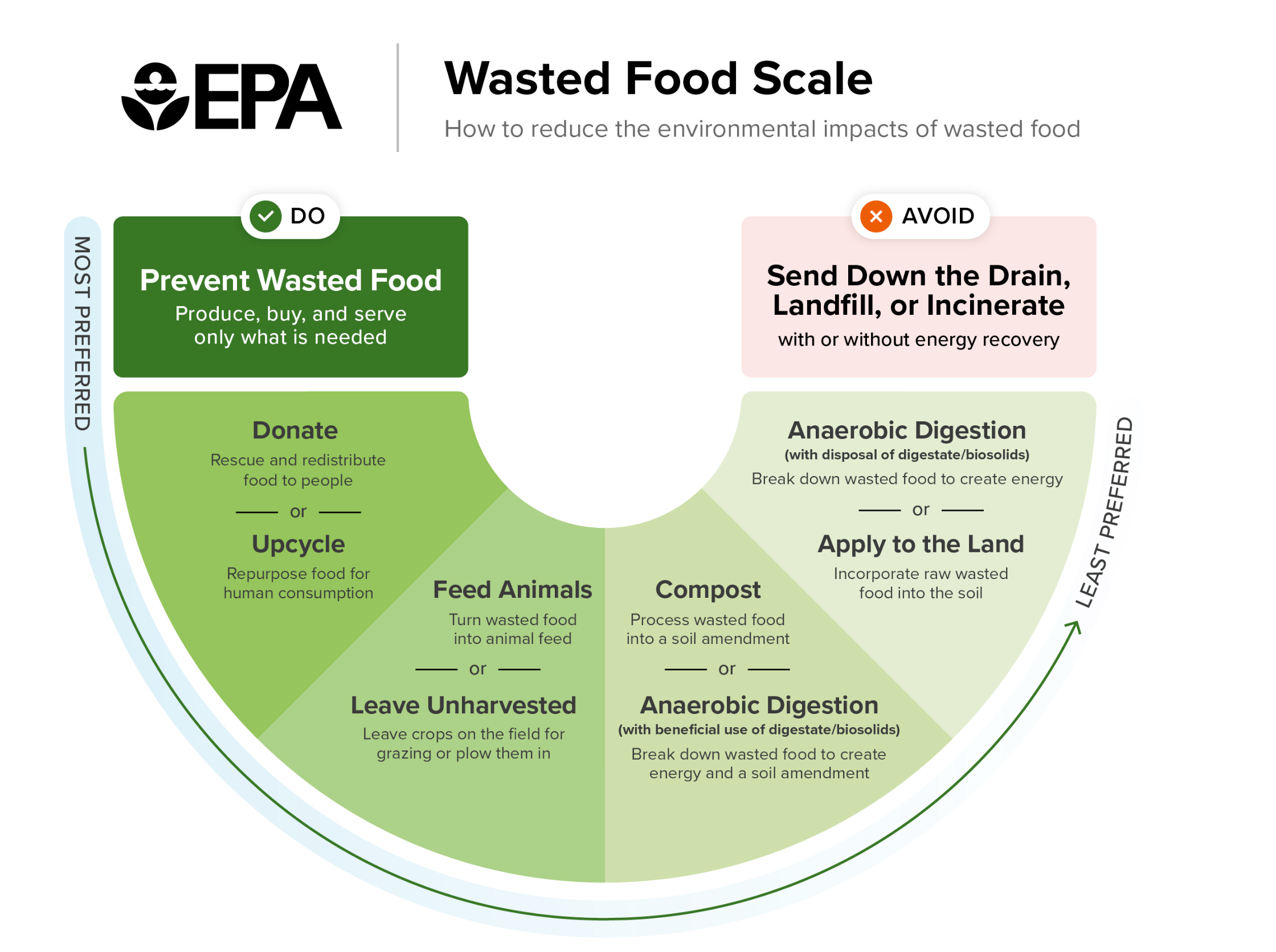
The Wasted Food Scale prioritizes actions that can be taken to prevent and divert wasted food. Each section focuses on different management strategies for your wasted food.
Source: United States Environmental Protection Agency
The average household wastes about 32% of the food they purchase.
This equates to roughly 3 to 4.5 pounds of food waste per person per week.
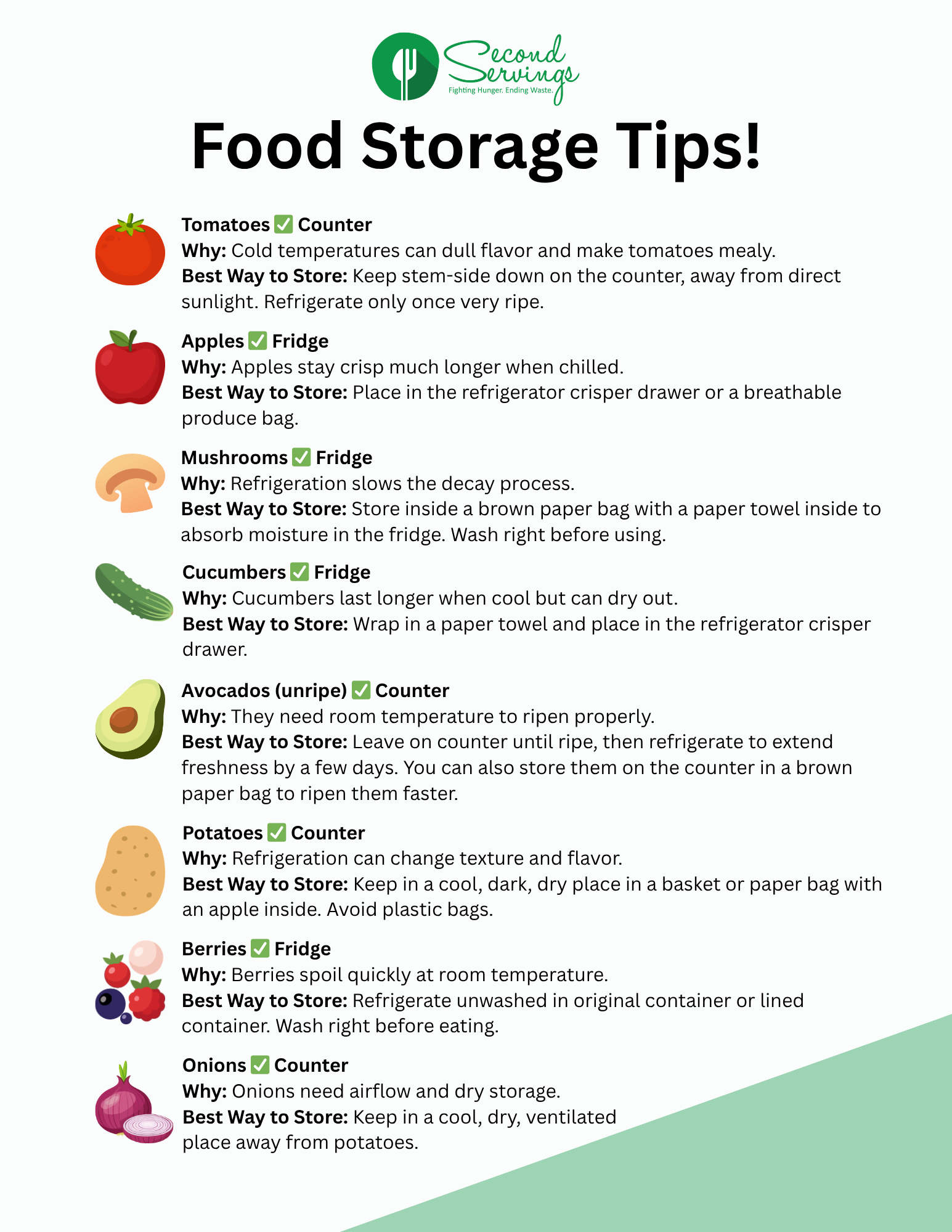
Refer to our food storage guide below for the best ways to store your food and keep it fresher for longer!
start a food rescue in your community
Food rescue is one of the most effective ways to reduce waste, fight hunger, and strengthen communities.
Since launching in 2015, Second Servings has grown into Houston’s leading perishable food rescue organization and we believe this model can create impact anywhere.
Interested in starting a food rescue organization in your own city? We created a helpful guide to get started.


